Queries: Are You OK?
Four questions about the position you've decided to take toward yourself

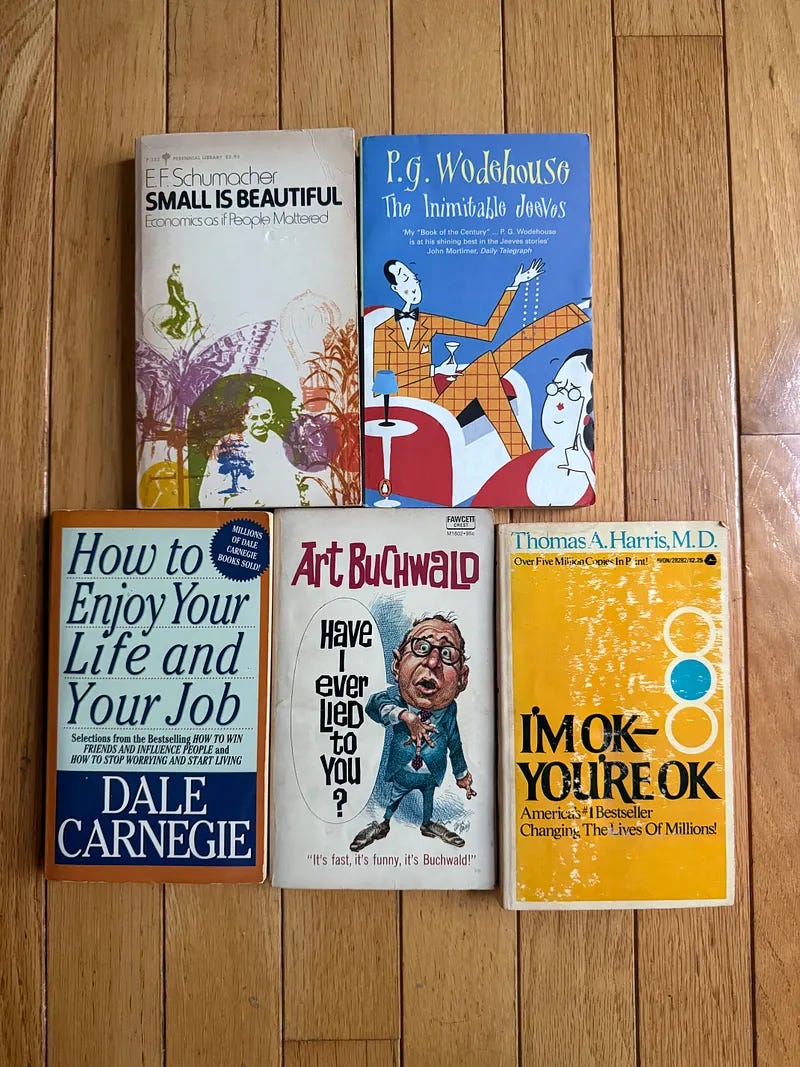
This week I’ve been reading I’m OK, You’re OK by Thomas Harris, a book I pulled from my dad’s shelf (his copy, purchased in 1989, still has that particular smell of old paperback). Published in 1967, it talks about transactional analysis, the idea that we move between three inner states, the Parent, the Adult, and the Child, depending on who we’re with and what we’re feeling. At its core, the book asks a deceptively simple question: what is the fundamental position you’ve decided to take toward yourself and toward other people? It’s one of those books that names something you’ve always felt but never had language for.
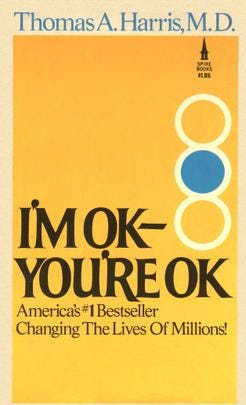
This week’s queries are inspired by the book, but are ever-applicable:
When you’re in a hard conversation, which version of yourself shows up most often -- the one following old rules, the one feeling old feelings, or the one actually thinking clearly?
What’s a belief about yourself you absorbed in childhood that you’re still, quietly, running on?
Is there a relationship in your life where you consistently feel like the one who is “less than”? What do you think keeps that dynamic in place?
When did you last feel genuinely, undefensively OK -- not performing okayness, but actually at ease with yourself and the person across from you?